A few years ago, getting a good ranking in Google seemed like solving a technical puzzle. If you had the right keywords, enough backlinks, and a well-optimized page, you were likely to show up near the top.
But things have changed.
Table of Contents
Even with solid SEO basics, you may still struggle to rank if your content feels untrustworthy. When you find a page that ranks well, it usually has something that sets it apart. It looks credible, thoughtful, and written by someone who really knows what they’re talking about.
This change isn’t random. It’s because search engines now evaluate content differently. At the heart of this change is a concept called E-E-A-T: Experience, Expertise, Authority, and Trust.
While you can’t measure E-E-A-T directly, it’s about how search engines figure out if information is credible. It’s why some content gets seen while other content is ignored.
What Is E-E-A-T, Really?
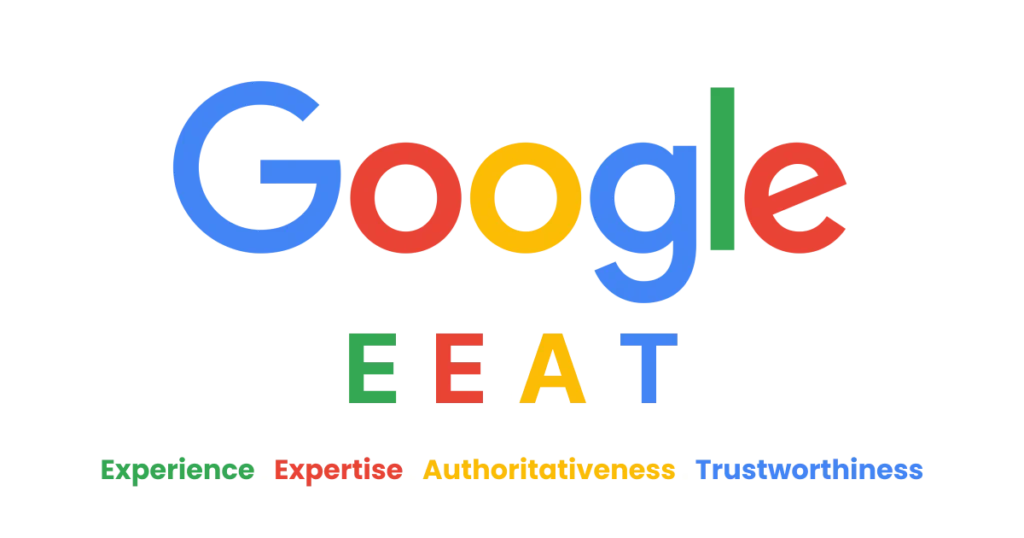
E-E-A-T stands for Experience, Expertise, Authority, and Trust. It comes from Google’s Search Quality Rater Guidelines, which human evaluators use to assess search result quality.
At first, it might seem like a simple checklist. Add an author bio, mention credentials, and include some references. But E-E-A-T is more than that.
It’s not about what you claim, but what your content actually shows. When someone reads your page, can they tell that the information is based on real knowledge? Does it show actual experience? Does it match what other trusted sources say? Does it feel reliable?
These are the signals that help users and search systems decide if content is credible.
Why Trust Became Central to Search
To understand why E-E-A-T matters, look at how the web has changed.
There’s always been a lot of content online, but now there’s even more. Anyone can publish anything quickly, and with AI tools, content creation is faster than ever.
This creates a challenge for search engines. If many pages answer the same question, how do they decide which ones to show?
Being accurate isn’t enough. Many pages can have technically correct information, but search engines care more about credibility. Can the content be trusted?
This is especially important for topics like health, finance, or legal advice, where bad information can be harmful.
E-E-A-T helps search systems navigate this by prioritizing content that shows real-world reliability.
Breaking Down E-E-A-T
Let’s look closer at each part of E-E-A-T and what it means.
Experience: Have You Actually Done This?
Experience is the newest part of E-E-A-T. It’s about whether you’ve actually done what you’re writing about.
Have you used the product you’re reviewing? Have you worked in the field you’re writing about? Have you dealt with the problem you’re explaining?
Content from firsthand experience feels different. It has details that are hard to fake, like specific observations and practical insights.
For example, a generic article about SEO tools might list features and prices. But an article written by someone who’s used those tools will talk about real workflows and findings.
That difference matters.
Expertise: Do You Understand the Topic?
Expertise is about depth of knowledge. It’s not just knowing the basics, but understanding the nuances and being able to explain them clearly.
You don’t always need formal credentials to show expertise. In fields like digital marketing or SEO, expertise comes from hands-on experience and continuous learning.
What matters is whether your content shows a genuine understanding of the subject.
Authority: Do Others Recognize You?
Authority is often about what others think of you. Are you cited by other websites? Do people reference your work? Are you part of relevant conversations in your industry?
Links still matter, but authority is more than just backlinks. Mentions, brand recognition, and reputation all contribute to how authoritative a source seems.
Over time, authority grows as your content becomes part of a network of trusted information.
Trust: Can Users Rely on You?
Trust is the foundation of E-E-A-T. Without it, the other elements don’t matter.
Trust is influenced by many factors, like accuracy, transparency, and clear sourcing. Even small details can affect trust, like unclear authorship or outdated information.
On the other hand, content that feels grounded, balanced, and well-supported builds confidence naturally.
The Connection Between E-E-A-T and Information Credibility
At its core, E-E-A-T is about information credibility. Search engines want to know if users can trust the content.
This is where E-E-A-T intersects with broader concepts from information science. Credibility isn’t just about facts, but about context, source reliability, and consistency across the web.
If many trusted sources agree on a topic, that reinforces credibility. If a piece of content stands alone without support, it may be treated with caution.
In this sense, E-E-A-T is part of a system that evaluates how information flows and connects across the internet.
How E-E-A-T Shows Up in Real Search Results
You can often see E-E-A-T in action by looking at search results.
For competitive searches, especially on important topics, the top-ranking pages often have certain characteristics. They’re written by recognizable brands or individuals, provide clear information, reference credible sources, and avoid exaggerated claims.
Interestingly, these pages don’t always look heavily optimized. They may not repeat keywords aggressively or follow rigid formatting rules.
Instead, they feel natural. That’s often a sign that the content was created with credibility in mind, not just rankings.
Practical Ways to Improve E-E-A-T
Improving E-E-A-T isn’t about adding one element to your page. It’s about strengthening your content’s overall credibility.
Show Who You Are
Clear authorship matters. Let readers know who created the content and why they’re qualified to speak on the topic.
Add Real Insight
Go beyond generic explanations. Include examples, experiences, or observations that reflect real understanding.
Use Reliable Sources
Referencing credible sources helps reinforce trust. It shows that your content is grounded in a broader body of knowledge.
Keep Content Updated
Outdated information can undermine credibility. Regular updates signal that your content is actively maintained and relevant.
Avoid Overpromising
Content that makes exaggerated claims often feels less trustworthy. A more balanced tone tends to build stronger credibility.
E-E-A-T in an AI-Driven Search World
As AI becomes more integrated into search, the importance of E-E-A-T is growing.
AI systems can generate content at scale, but they don’t automatically create trust. In fact, the rise of AI-generated content makes credibility even more important.
This creates an interesting dynamic. The more content becomes automated, the more valuable human insight becomes.
Firsthand experience, thoughtful analysis, and genuine expertise are harder to replicate. These elements help content stand out in a crowded landscape.
Building Trust Takes Time
One of the most overlooked aspects of E-E-A-T is that it doesn’t happen instantly.
You can’t publish one article and expect to be seen as an authority. Credibility builds gradually through consistent effort. Each piece of content contributes to how your site is perceived over time.
It’s similar to how trust works in real life. People don’t trust someone because of one conversation. They trust them because of repeated, reliable interactions.
The same idea applies to content.
A Different Way to Think About SEO
E-E-A-T shifts the focus of SEO in a subtle but important way.
Instead of asking, “How do I rank for this keyword?”, the better question is, “Why should anyone trust this content?”
That question changes how content is created. It encourages deeper thinking, clearer communication, and more honest insights.
And when that happens, something interesting follows. Content doesn’t just rank. It resonates. At the time, ranking was largely influenced by signals like links and authority, often simplified through models such as PageRank.
Because at the end of the day, search isn’t just about finding information. It’s about finding information you can trust.